How Gentle Parenting Can Work: Raising Children with Empathy and Boundaries
By Raelynn Sanchez, MS, LLMFT
Affirmations and Gratitude Counseling, LLC
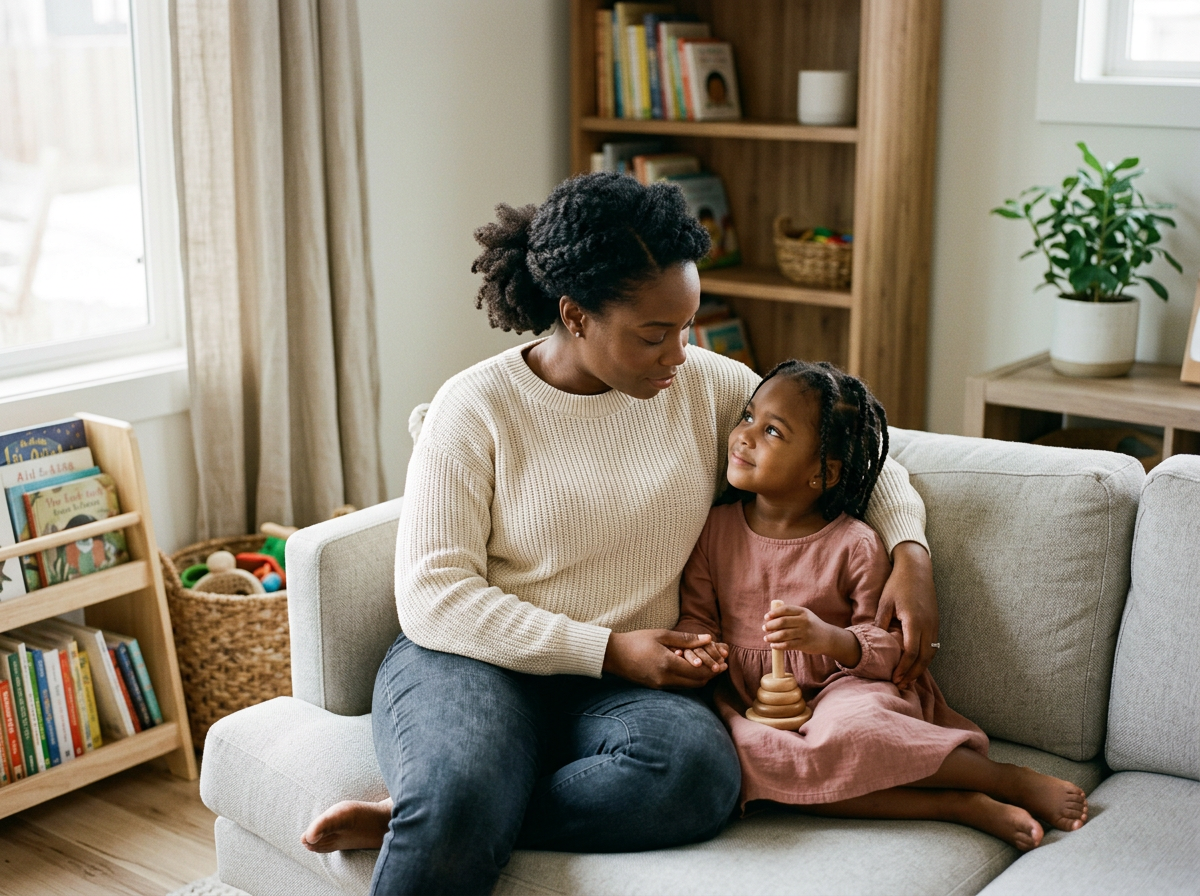
Parenting can sometimes feel like a constant balancing act. You want your child to feel loved, heard, and understood, while also helping them learn boundaries, responsibility, emotional regulation, and appropriate behavior.
That is one reason gentle parenting has become such a popular topic among parents and caregivers.
Gentle parenting focuses on connection, empathy, communication, respect, and healthy boundaries rather than relying primarily on fear, shame, or harsh punishment.
But let's clear up one common misconception right away: Gentle Parenting does not mean Permissive Parenting.
Gentle parenting does not mean allowing children to do whatever they want or avoiding consequences. Instead, it encourages parents to maintain appropriate boundaries while responding to their children with compassion and understanding.
So, what can gentle parenting actually look like in everyday life?
Understanding Gentle Parenting
At its core, gentle parenting encourages parents to recognize that children are still developing the skills they need to manage emotions, communicate effectively, solve problems, and understand expectations.
Instead of only asking, "How do I stop this behavior?" parents can also consider: "What might my child be communicating through this behavior?"
That question doesn't mean every behavior is acceptable. It simply encourages us to look beyond the behavior and consider what may be happening underneath it.
For example, a child having a meltdown may be tired, overwhelmed, hungry, frustrated, disappointed, or struggling to express what they need.
A gentle parenting approach allows parents to address the behavior while also recognizing the child's emotional experience.
Four Important Principles of Gentle Parenting
1.Respect
Children deserve to be treated with respect.
Respect can include listening to your child, acknowledging their thoughts and feelings, offering age-appropriate choices, and speaking to them in a way that preserves their dignity.
Respect does not mean children get to make every decision. Parents are still responsible for providing structure and setting appropriate limits.
For example, instead of simply saying: “Because I said so!" A parent might say: "I know you want to keep playing because you're having fun. It's time to leave the park now, even though I know you're disappointed."
The boundary remains in place, but the child's feelings are acknowledged.
2. Empathy
Children can experience very strong emotions before they have developed the skills necessary to manage those emotions effectively.
Parents can validate a child's feelings without approving inappropriate behavior.
For example: "I understand that you're angry because your sibling took your toy. It's okay to feel angry, but it's not okay to hit."
This teaches children an important lesson: all feelings are okay, but not every behavior is okay.
Over time, this can help children develop healthier ways of expressing and managing emotions.
3. Boundaries
Gentle parenting still requires boundaries.
Children benefit from structure, consistency, and predictable expectations. Boundaries can help children understand what is expected of them and provide a sense of safety.
The difference is often in how those boundaries are communicated.
For example: "I won't let you hit your brother. If you're angry, you can tell him you're upset or take some space."
The parent is still saying no to the behavior while giving the child an alternative.
4. Modeling
Children learn by watching the adults around them.
If we want children to communicate respectfully, we have to demonstrate respectful communication. If we want them to learn emotional regulation, we can show them healthy ways of managing our own emotions.
That doesn't mean parents have to be calm every moment of every day. Parents are human, too.
A parent might say: "I'm feeling really frustrated right now. I'm going to take a minute to calm down, and then we can talk."
This models an important skill: emotions are normal, and we can learn healthy ways to respond to them.
What Does Gentle Parenting Look Like in Real Life?
Knowing what gentle parenting means is one thing. Practicing it during a stressful parenting moment is another.
Maybe you've asked your child five times to put their shoes on. Maybe they're crying because they don't want to leave the playground. Maybe siblings are arguing in the backseat while you're already running late.
Real life can make parenting strategies challenging.
Here are a few approaches that may help.
Communicate Clearly
Children often respond better when expectations are clear and specific. Instead of: "Don't run!" try: "Please walk so you can stay safe."
Rather than focusing only on what your child should stop doing, explain what you want them to do instead.
Try to Stay Calm
This can be one of the hardest parts.
When a child is upset, it can be difficult for a parent to remain calm. However, responding with intense emotion can sometimes make an already difficult situation even bigger.
Take a breath. Lower your voice. Pause before responding if you need to. And remember that you don't have to react immediately to every situation.
Sometimes giving yourself a few seconds to regulate can help you respond more intentionally.
Connect Before You Correct
Before immediately correcting the behavior, acknowledge what your child may be experiencing. You might say: ”I can see that you're really upset."
Or: "You really wanted to keep playing, didn't you?"
Acknowledging the emotion does not mean you're giving in. You're simply communicating: I see you, and I understand that you're having a hard time.
Once the child feels heard, you can move toward addressing the behavior and reinforcing the boundary.
Encourage Problem-Solving
As children grow, give them opportunities to participate in solving problems.
Instead of immediately providing the answer, you might ask: "What do you think we could do differently next time?" or "What could help make this situation better?"
These conversations can help children practice communication, decision-making, and problem-solving.
Gentle Parenting Isn't Perfect Parenting
One of the biggest misconceptions about gentle parenting is that parents are supposed to remain calm and patient every second of every day.
That's simply not realistic. Parents get frustrated. Parents make mistakes. Parents have difficult days.
Gentle parenting isn't about being a perfect parent. It's about becoming more intentional in how you respond and being willing to repair when things don't go the way you intended. Maybe you raised your voice. Maybe you reacted more strongly than you wanted to. That doesn't mean you've failed as a parent.
You can come back to your child and say:
"I was really frustrated earlier, and I shouldn't have yelled at you. I'm sorry. I'm going to work on taking a breath before responding next time."
Repair matters.
It teaches children that adults can take responsibility for their actions and that relationships can move forward after conflict.
When Gentle Parenting Feels Difficult
Gentle parenting can be especially challenging if you were raised with a very different parenting style.
Some parents grew up hearing things like: "Because I said so." "Children should be seen and not heard." "You don't question adults."
If you're trying to parent differently from how you were raised, you may sometimes wonder whether you're being too lenient or whether you're doing something wrong.
You may also receive criticism from relatives, friends, or other parents who don't understand your approach. It's important to remember:
Gentle parenting does not mean having no boundaries.
You can be warm and firm. You can be empathetic and consistent. You can acknowledge your child's feelings while still saying no.
You can love your child deeply while holding them accountable for inappropriate behavior. These things can exist together.
Finding What Works for Your Family
There is no single parenting strategy that will work exactly the same way for every family.
Children have different personalities, temperaments, developmental needs, and experiences. Parents also have different circumstances, resources, strengths, and challenges.
The goal isn't to follow a parenting philosophy perfectly. The goal is to create a relationship where your child can learn: My feelings matter. There are boundaries. My behavior has consequences. I can make mistakes and learn from them. I can come to my parent when I need support. Gentle parenting is ultimately about finding a balance between connection and structure. It's about teaching rather than simply punishing. It's about understanding without excusing inappropriate behavior. And it's about remembering that children are still learning and parents are learning, too.
Final Thoughts
Parenting isn't about getting everything right. It's about showing up, learning, repairing, and trying again.
If you're interested in incorporating gentle parenting into your family, start small. Try listening a little longer before responding. Validate your child's feelings. Set clear expectations. Give appropriate choices when possible. And give yourself permission to make mistakes and learn from them.
Most importantly, remember that gentle parenting isn't about raising children without boundaries. It's about raising children with boundaries while also helping them feel safe, respected, understood, and loved.
As parents, we don't have to be perfect. We just have to keep learning.